Varanasi isn’t just another tourist destination—it’s an experience. Whether you’re visiting to seek blessings at the Kashi Vishwanath Temple, witness the mesmerizing Ganga Aarti, take a sunrise boat ride on the Ganges, or simply immerse yourself in the city’s centuries-old culture, choosing the right time to visit can make a significant difference.
One traveler may dream of watching the ghats illuminated during Dev Deepawali, while another may prefer peaceful mornings with fewer crowds. Some visitors prioritize pleasant weather for sightseeing, while others plan their journey around religious festivals.
So, when is the best time to visit Varanasi?
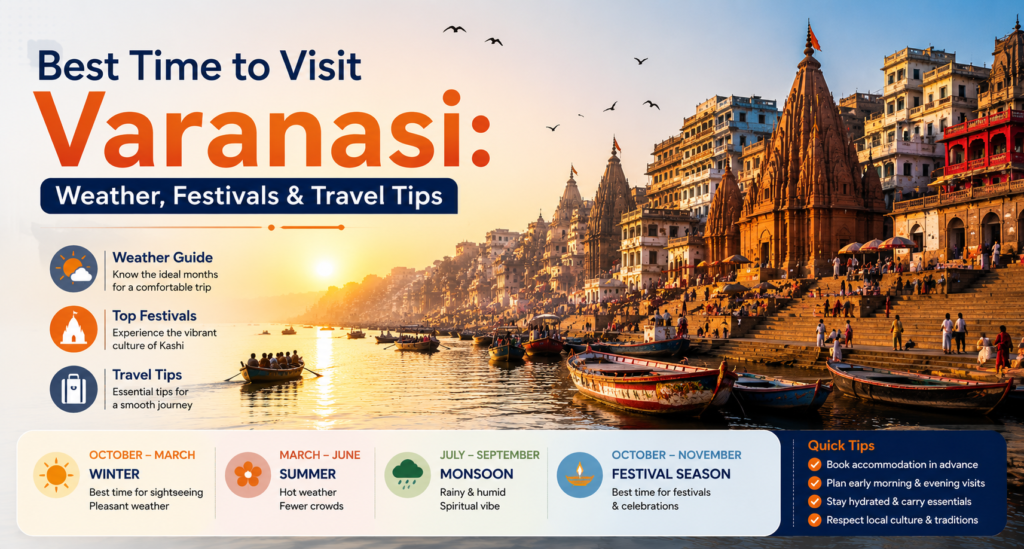
For most travelers, the answer is October to March. The weather is cooler, outdoor activities are comfortable, and many of the city’s major festivals take place during this period. However, every season has its own charm, and the ideal time depends on what you want from your trip.
This guide explains Varanasi’s weather throughout the year, important festivals, crowd conditions, and practical travel tips to help you plan a memorable visit.
Understanding Varanasi’s Climate
Varanasi experiences three primary seasons:
- Winter (October to March)
- Summer (April to June)
- Monsoon (July to September)
Each season offers a different experience for visitors.
Winter (October to March): The Best Time to Visit Varanasi
If you’re visiting Varanasi for the first time, winter is generally considered the most comfortable season.
Temperatures are pleasant, making it easy to explore temples, ghats, markets, and historical attractions without the discomfort of extreme heat.
Why Winter Is the Most Popular Season
During these months, visitors can comfortably enjoy:
- Kashi Vishwanath Temple
- Dashashwamedh Ghat
- Assi Ghat
- Sunrise and sunset boat rides
- Sarnath
- Ramnagar Fort
- Local food walks
- Shopping in Banaras Silk markets
The cooler weather also makes walking through the narrow lanes of the old city much more enjoyable.
Festivals That Make Winter Special
Dev Deepawali
Celebrated on Kartik Purnima, Dev Deepawali transforms the ghats into a breathtaking spectacle with thousands of oil lamps illuminating the riverfront. Cultural performances, devotional music, and a festive atmosphere attract visitors from across India and abroad.
This is one of the busiest times of the year, so booking hotels and taxis well in advance is strongly recommended.
Kartik Purnima
One of the most auspicious days in the Hindu calendar, Kartik Purnima draws thousands of devotees for a holy dip in the Ganges and temple visits.
Mahashivratri
As the city of Lord Shiva, Varanasi celebrates Mahashivratri with immense devotion. Processions, temple rituals, and special prayers make it an unforgettable experience for pilgrims.
Expect large crowds around the Kashi Vishwanath Temple.
Summer (April to June)
Summer in Varanasi is characterized by high temperatures, especially during the afternoon.
While sightseeing during the day can be challenging, mornings and evenings remain suitable for:
- Temple visits
- Boat rides
- Ganga Aarti
- Photography
Summer also tends to see fewer tourists, which means popular attractions are generally less crowded.
Advantages of Visiting in Summer
- Better hotel availability
- Potentially lower accommodation rates
- Less crowded sightseeing
- Easier temple darshan on non-festival days
Travelers should stay hydrated, wear light cotton clothing, and avoid prolonged outdoor activities during peak afternoon hours.
Monsoon (July to September)
The monsoon season brings regular rainfall, refreshing the city after the summer heat.
The Ganges rises significantly during this period, creating dramatic views along the ghats.
While rain can occasionally disrupt outdoor plans, many travelers enjoy the peaceful atmosphere and lush surroundings.
Things to Keep in Mind
Heavy rainfall may affect:
- Boat ride availability
- Riverfront access at some ghats
- Outdoor sightseeing schedules
Always check local conditions before planning river activities during the monsoon.
Best Time for Ganga Aarti
The Ganga Aarti at Dashashwamedh Ghat takes place every evening throughout the year.
However, the experience is particularly enjoyable during the cooler months from October to March, when comfortable weather allows visitors to arrive early and spend more time exploring the ghats before the ceremony.
During festivals, the atmosphere becomes even more vibrant—but so do the crowds.
Best Time to Visit Kashi Vishwanath Temple
The temple welcomes devotees throughout the year.
For a more comfortable visit:
- Choose weekdays when possible.
- Arrive early in the morning.
- Avoid major festival dates if you prefer shorter queues.
During Mahashivratri and the month of Shravan (Sawan), visitor numbers increase significantly.
Best Time for Sunrise Boat Rides
One of Varanasi’s signature experiences is watching the city awaken from the Ganges.
The months between October and March generally offer pleasant morning temperatures and clearer skies, making sunrise boat rides especially popular among photographers and travelers.
Best Time for Photography
If photography is a priority, consider visiting during winter.
You’ll enjoy:
- Soft morning light
- Pleasant weather
- Misty sunrise scenes
- Beautiful evening riverfront views
- Festival decorations (season permitting)
Dev Deepawali is particularly popular among photographers because of the illuminated ghats.
Visiting During Festival Season
Varanasi becomes exceptionally vibrant during major festivals.
Some of the most important include:
- Dev Deepawali
- Mahashivratri
- Kartik Purnima
- Diwali
- Holi
- Shravan Month
- Makar Sankranti
These celebrations provide unforgettable cultural experiences but also lead to:
- Larger crowds
- Higher hotel demand
- Increased traffic
- Longer waiting times at temples
Advance planning is essential.
Choosing the Right Time Based on Your Travel Goals
For Pilgrims
The cooler months from October to March provide comfortable conditions for temple visits and religious activities.
For Families
Winter offers the most pleasant weather for sightseeing and exploring multiple attractions.
For Budget Travelers
Summer and parts of the monsoon season may offer better hotel availability and lower accommodation costs, although weather conditions are less favorable.
For Photographers
October through February is generally considered ideal for capturing sunrise, sunset, festivals, and daily life along the ghats.
Travel Tips for Visiting Varanasi
Book Accommodation Early
If you’re visiting during Dev Deepawali, Mahashivratri, or long holiday weekends, reserve your hotel well in advance.
Hire a Reliable Taxi
The Best Taxi in Varanasi is one of the most convenient and reliable ways to travel to and from the city’s major destinations, including:
- Varanasi Airport
- Railway stations
- Hotels
- Kashi Vishwanath Temple
- Sarnath
- Assi Ghat
- Ramnagar Fort
It also saves time if you’re covering multiple attractions in a day.
Wear Comfortable Footwear
Many parts of the old city are best explored on foot.
Comfortable walking shoes are highly recommended.
Respect Local Customs
When visiting temples and cremation ghats:
- Dress modestly.
- Follow photography guidelines.
- Maintain silence where appropriate.
- Respect religious practices.
Stay Hydrated
Regardless of the season, carry drinking water, especially during extended sightseeing.
Suggested 3-Day Itinerary
Day 1
- Kashi Vishwanath Temple
- Kashi Vishwanath Corridor
- Dashashwamedh Ghat
- Evening Ganga Aarti
Day 2
- Sunrise boat ride
- Assi Ghat
- Sarnath
- Bharat Kala Bhavan
- Sankat Mochan Temple
Day 3
- Ramnagar Fort
- Banaras Silk Market
- Vishwanath Gali
- Namo Ghat
- Departure
Final Thoughts
The best time to visit Varanasi depends on the experience you’re looking for, but for most travelers, October to March offers the ideal combination of pleasant weather, vibrant festivals, and comfortable sightseeing.
If your goal is to witness the city’s spiritual energy at its peak, plan your trip around Dev Deepawali or Mahashivratri, while keeping in mind that these periods attract large crowds.
If you prefer a quieter and more budget-friendly visit, the summer or monsoon months may be suitable, provided you’re prepared for the weather.
No matter when you visit, Varanasi offers an unforgettable blend of spirituality, history, culture, and timeless traditions that continue to captivate travelers from around the world.
Frequently Asked Questions (FAQs)
What is the best month to visit Varanasi?
The months from November to February are generally considered the best due to pleasant weather and comfortable sightseeing conditions.
Is October a good time to visit Varanasi?
Yes. October marks the beginning of the cooler season and is an excellent time for temple visits, boat rides, and local sightseeing.
Which festival is the most famous in Varanasi?
Dev Deepawali is one of the city’s most celebrated festivals, followed by Mahashivratri, Kartik Purnima, and Diwali.
Can I visit Varanasi during the monsoon?
Yes. While rainfall can affect some outdoor activities, the city remains open to visitors throughout the monsoon season.
How many days are enough for Varanasi?
A 3-day itinerary is sufficient for most visitors to explore the major temples, ghats, Sarnath, markets, and cultural attractions.
Is winter crowded in Varanasi?
Yes. Winter is the peak tourist season, especially during major religious festivals and public holidays.