
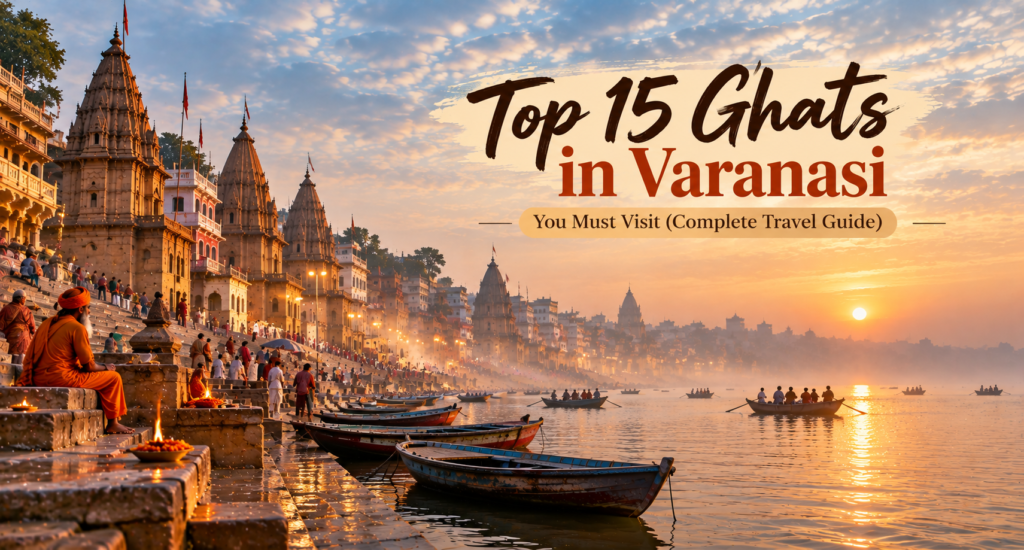
Varanasi, also known as Kashi or Banaras, is one of the world’s oldest continuously inhabited cities and a place where spirituality, history, and daily life come together along the banks of the sacred River Ganga. Stretching for several kilometers, the city’s riverfront is lined with more than 80 ghats, each with its own history, traditions, and cultural significance.
Some ghats are known for grand religious ceremonies, others for peaceful sunrise views, while a few are closely associated with important Hindu rituals. Together, they form the heart of Varanasi and offer visitors an unforgettable glimpse into the city’s timeless character.
If you’re planning a trip in 2026, this guide highlights the 15 most important ghats in Varanasi, what makes each one special, and practical tips to help you explore them.
Why Are the Ghats of Varanasi So Famous?
The ghats are stone steps leading down to the River Ganga. For centuries, they have served as places for:
- Holy bathing
- Religious ceremonies
- Evening Ganga Aarti
- Meditation and yoga
- Boat rides
- Cultural events
- Cremation rituals
- Photography and sightseeing
Each ghat has its own identity, making a walk or boat ride along the river one of the most memorable experiences in Varanasi.
1. Dashashwamedh Ghat
Dashashwamedh Ghat is the most famous and busiest ghat in Varanasi. According to Hindu tradition, Lord Brahma performed a grand yajna (sacrificial ritual) here.
Highlights
- Evening Ganga Aarti
- Boat rides
- Religious ceremonies
- Photography
- Riverfront views
Best Time to Visit: Late afternoon to evening, especially before the Ganga Aarti.
2. Assi Ghat
Located at the southern end of the city, Assi Ghat is known for its relaxed atmosphere and beautiful sunrise views.
Why Visit?
- Morning yoga sessions
- Sunrise boat rides
- Cultural programs
- Cafés and local eateries
This ghat is particularly popular with students, international visitors, and photographers.
3. Manikarnika Ghat
Manikarnika Ghat is one of the oldest and most sacred cremation ghats in Hinduism. Many devotees believe that cremation here is spiritually significant.
Visitors are welcome to observe respectfully from a distance. Photography should be avoided unless explicitly permitted, as it can be intrusive during funeral rites.
4. Harishchandra Ghat
Named after King Harishchandra, who is remembered in Hindu tradition for his unwavering commitment to truth, this is another active cremation ghat.
It offers insight into one of the city’s oldest continuous traditions and should be visited with sensitivity and respect.
5. Rajendra Prasad Ghat
Located next to Dashashwamedh Ghat, this ghat provides an excellent vantage point for watching the Ganga Aarti.
It is often slightly less crowded while still offering beautiful views of the ceremony.
6. Lalita Ghat
Lalita Ghat is directly connected to the Kashi Vishwanath Corridor and is known for its peaceful surroundings.
Attractions
- Nepalese Temple
- River views
- Traditional architecture
- Easy access from the temple corridor
7. Scindia Ghat
Scindia Ghat is famous for its partially submerged Shiva temple, which leans slightly toward the river.
Why It’s Worth Visiting
- Quiet atmosphere
- Distinctive architecture
- Excellent photography opportunities
- Sunrise views
8. Panchganga Ghat
This historic ghat is believed in Hindu tradition to be the meeting point of five sacred rivers.
It has long been associated with scholars, saints, and spiritual learning, making it a meaningful stop for visitors interested in Varanasi’s religious history.
9. Kedar Ghat
Inspired by the Kedarnath Temple in Uttarakhand, Kedar Ghat is particularly popular among South Indian pilgrims.
Highlights include:
- Colorful temple architecture
- Bathing area
- Religious significance
10. Chet Singh Ghat
Known for the historic Chet Singh Fort, this ghat reflects an important chapter in the city’s history.
Visitors interested in architecture and heritage often include it in walking tours.
11. Darbhanga Ghat
Darbhanga Ghat is one of the most photogenic ghats in Varanasi.
Known For
- Palace architecture
- Riverside views
- Heritage buildings
- Photography
The palace overlooking the river gives this ghat a distinctive character.
12. Ahilyabai Ghat
Named after Maharani Ahilyabai Holkar, who contributed to the restoration of several sacred sites across India, this ghat is peaceful and less crowded.
It offers a calm setting for reflection and riverside walks.
13. Shivala Ghat
Shivala Ghat is popular among visitors seeking a quieter experience away from the busiest sections of the riverfront.
Nearby attractions include:
- Historic buildings
- Temples
- Traditional neighborhoods
14. Namo Ghat
One of the newest additions to the Varanasi riverfront, Namo Ghat has become popular for its modern facilities and open spaces.
Features
- Wide promenade
- Seating areas
- Landscaped gardens
- Cafés
- Scenic river views
It’s an excellent place for families, morning walks, and evening outings.
15. Raj Ghat
Situated near the Malviya Bridge, Raj Ghat is among the quieter ghats in Varanasi.
Why Visit?
- Peaceful atmosphere
- Less crowded
- Excellent sunrise photography
- Historic surroundings
Best Way to Explore the Ghats
There are three popular ways to experience the ghats:
1. Walking Tour
Walking allows you to explore the narrow lanes, temples, markets, and hidden corners that connect the ghats.
2. Boat Ride
A sunrise or sunset boat ride offers panoramic views of the riverfront and many of the city’s most famous ghats.
3. Private Taxi + Walking
For visitors staying farther from the riverfront, booking a reliable taxi service in Varanasi is often the most convenient way to reach the nearest accessible point. From there, you can continue exploring the narrow lanes on foot or enjoy a boat ride along the Ganges.
Whether you are travelling with family, friends, or a large group, you can also hire a Tempo Traveller in Varanasi for a comfortable and convenient journey to nearby sightseeing locations. This combination of private transport and walking allows you to explore Varanasi at your own pace while enjoying a hassle-free travel experience.
Suggested Ghat Walking Route
A popular walking route includes:
Assi Ghat
↓
Kedar Ghat
↓
Harishchandra Ghat
↓
Dashashwamedh Ghat
↓
Rajendra Prasad Ghat
↓
Manikarnika Ghat
↓
Scindia Ghat
↓
Lalita Ghat
↓
Panchganga Ghat
↓
Raj Ghat
This route covers many of Varanasi’s most iconic riverfront landmarks.
Best Time to Visit the Ghats
The months from October to March are generally the most comfortable for exploring the riverfront due to cooler weather.
For different experiences:
- Sunrise: Boat rides, photography, yoga
- Evening: Ganga Aarti, cultural atmosphere
- Festivals: Dev Deepawali, Kartik Purnima, Mahashivratri
Expect larger crowds during major festivals.
Travel Tips
- Wear comfortable walking shoes.
- Dress modestly, especially when visiting temples.
- Carry drinking water.
- Follow local customs at cremation ghats.
- Keep your belongings secure in crowded areas.
- Check local conditions before planning a boat ride during the monsoon.
Final Thoughts
The ghats are the soul of Varanasi. Each one reflects a different aspect of the city’s history, faith, and daily life. Whether you’re witnessing the grandeur of the Ganga Aarti at Dashashwamedh Ghat, enjoying a peaceful sunrise at Assi Ghat, or exploring the historic architecture of Darbhanga Ghat, every stop offers a unique perspective on one of India’s most remarkable destinations.
If you’re short on time, consider hiring a local taxi to reach the riverfront and then explore the ghats on foot or by boat for a seamless and memorable experience.
Frequently Asked Questions (FAQs)
1. Which is the most famous ghat in Varanasi?
Dashashwamedh Ghat is the most famous due to its daily Ganga Aarti and central location.
2. Which ghat is best for sunrise?
Assi Ghat is widely regarded as one of the best places to watch the sunrise and begin a morning boat ride.
3. Can tourists visit Manikarnika Ghat?
Yes. Visitors may observe from a respectful distance. Photography should be avoided unless permission is granted.
4. Which ghat is best for the Ganga Aarti?
The evening Ganga Aarti is held at Dashashwamedh Ghat every day.
5. How many ghats are there in Varanasi?
Varanasi has more than 80 ghats along the western bank of the River Ganga.
6. What is the best way to explore the ghats?
A combination of a sunrise boat ride, a walking tour, and a local taxi for transportation to and from the riverfront provides the most comprehensive experience.